A trip to Gilan is not only about misty forests, the Caspian coast, and lush villages; you can also take part of its memory home through the province’s local flavours and crafts. From fragrant Lahijan tea and Rudbar olives to Fuman cookies, local rice, wooden handicrafts, and traditional textiles, travellers have many choices.
If you are wondering which Gilan souvenirs are best or what to buy as a gift, knowing the differences between products and their main places of production will help you choose. This guide introduces Gilan’s edible souvenirs and handicrafts, suitable places to shop, and key buying tips.
Famous Gilan Souvenirs: Local Foods and Traditional Handicrafts
Gilan is one of Iran’s most diverse provinces for local products. Its humid climate, fertile land, rural culture, and long agricultural history have created a rich range of traditional foods as well as handicrafts. Gilan souvenirs can be grouped into two main categories.
Edible Souvenirs from Gilan
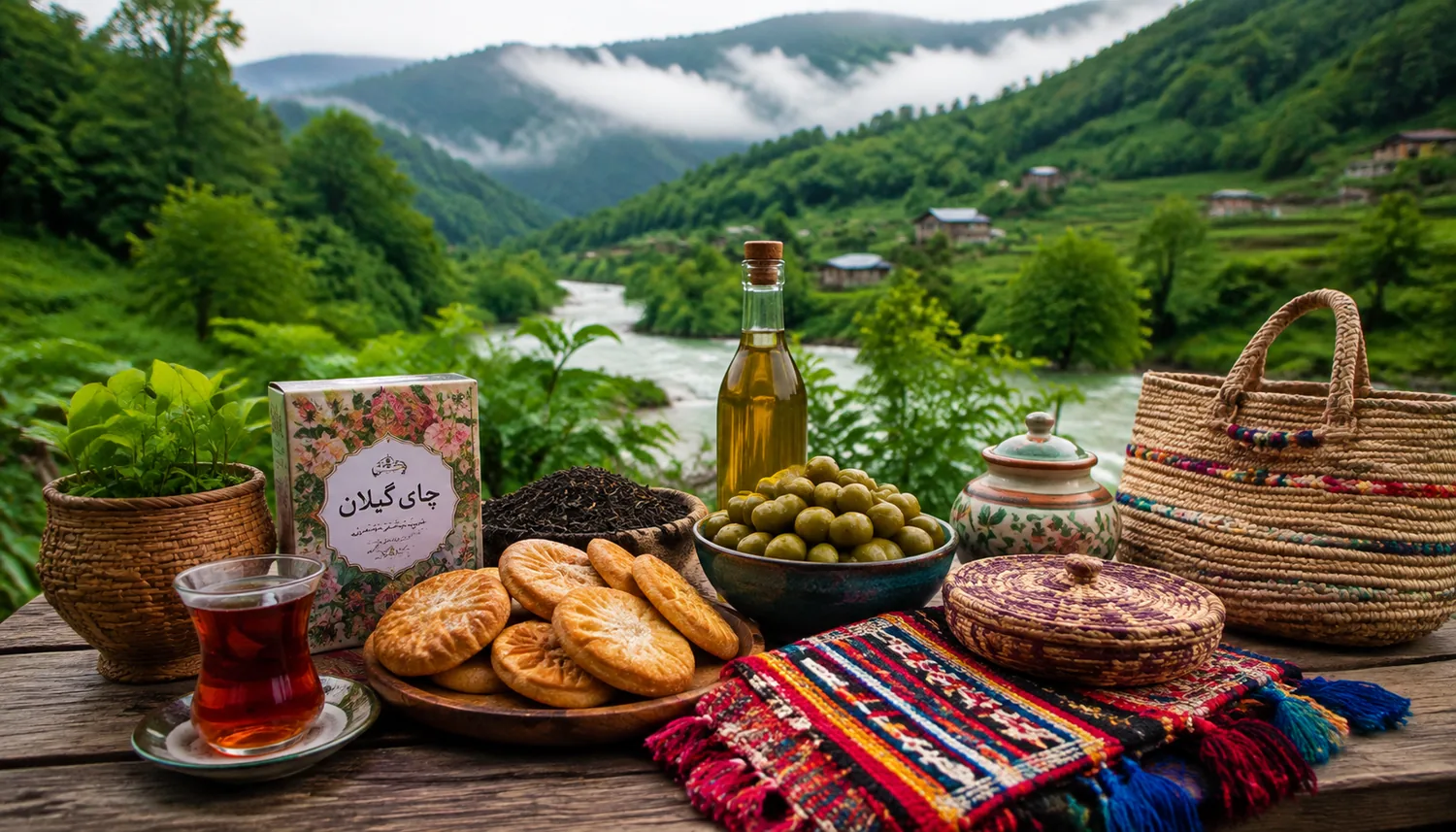
- Lahijan tea
- Local Gilan rice
- Rudbar olives and olive oil
- Fuman and Lahijan cookies
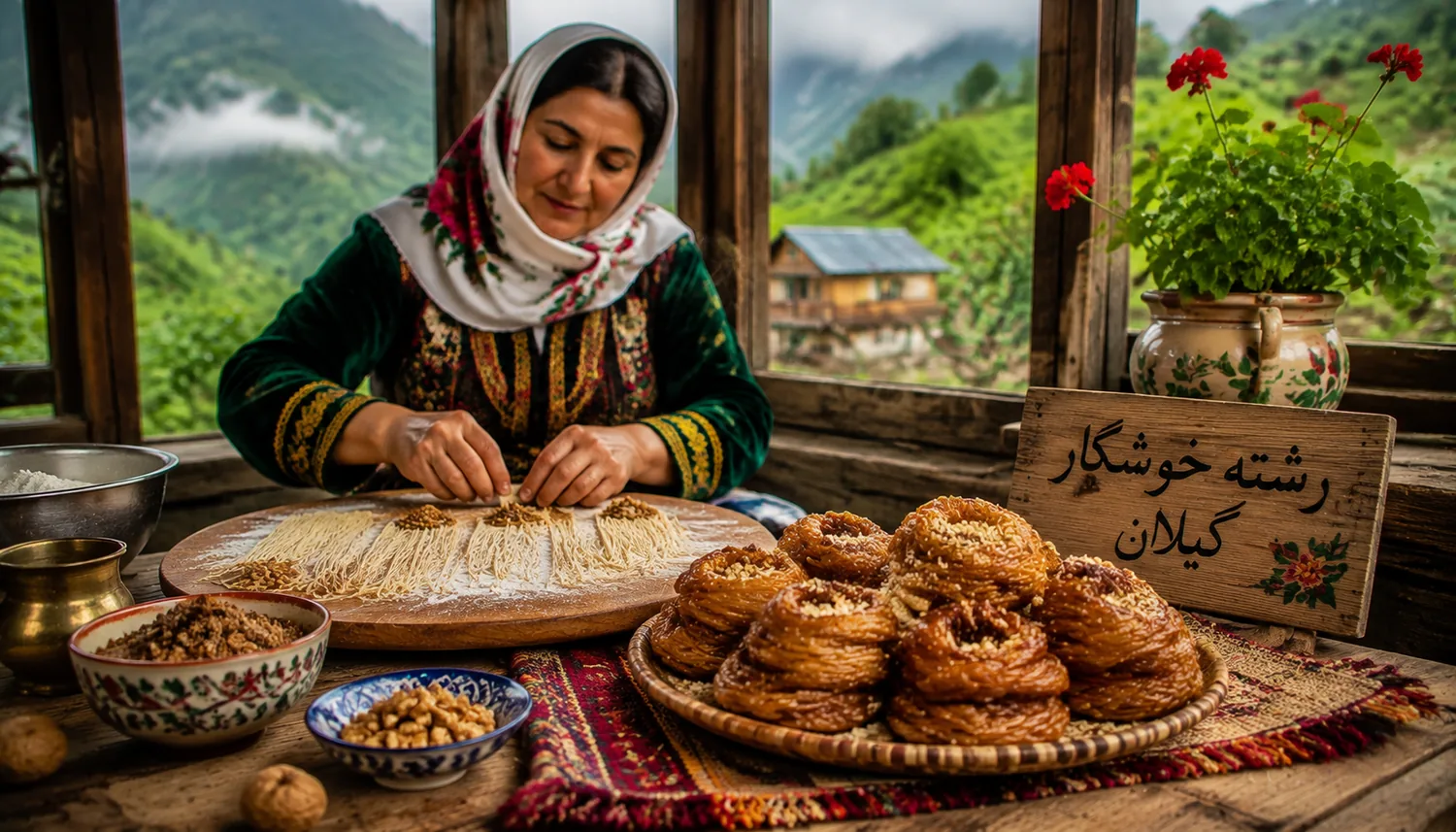
- Reshteh khoshkar
- Siah Mazgi cheese from Shaft
- Smoked fish and local fish
- Pomegranate paste, pickles, and traditional jams
- Peanuts, hazelnuts, and orchard products
Gilan Handicrafts
- Mat weaving and bamboo weaving
- Chadorshab weaving
- Rashti embroidery
- Pottery
- Traditional wooden products
- Chamoosh shoemaking and local hand-sewn items
The Best Edible Souvenirs from Gilan
Lahijan Tea: Gilan’s Most Famous Souvenir
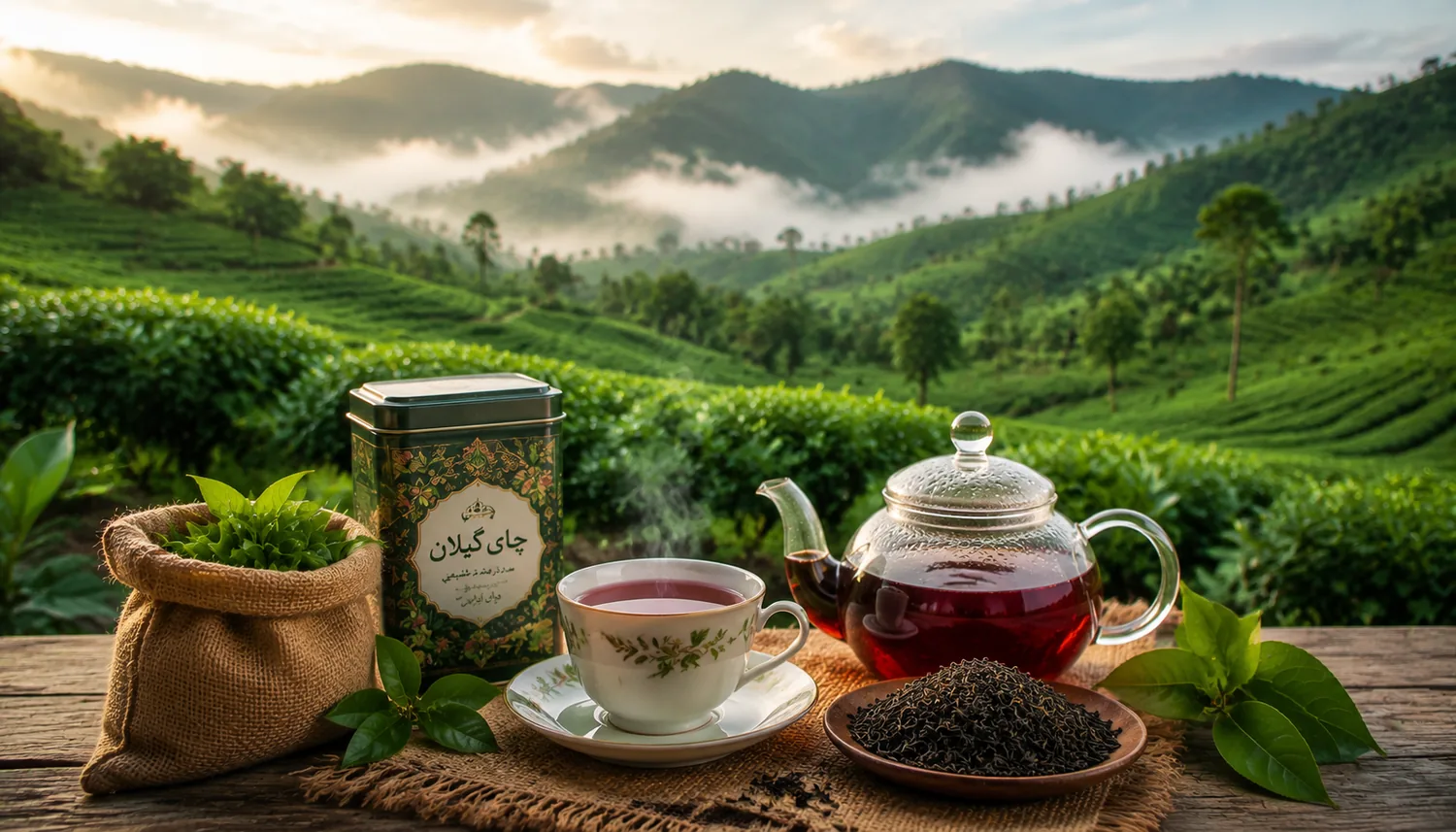
Lahijan tea is one of the first products that comes to mind when Gilan is mentioned. Lahijan is among Iran’s leading tea-growing areas, and tea has long been an important part of the region’s culture and economy.
Because it is processed in a more traditional way than many industrial teas, Iranian tea appeals to people who enjoy a natural taste. When buying Lahijan tea, look beyond the city name and check the production place, packaging date, and seller’s reliability. Sargol, Momtaz, Ghalam, and Broken tea are among the varieties you may find, classified by harvest time and leaf type. For more information, read the guide to tea types.
Gilan Rice: The Fragrance of Northern Paddy Fields at Home
Rice is one of Gilan’s most important agricultural products and most popular souvenirs. Green paddy fields are inseparable from the region’s identity, and many travellers prefer a useful product such as local rice over a decorative souvenir.
Hashemi, Sadri, Domsiah, and Kazemi are local Gilan rice varieties valued for their distinctive aroma and flavour. Telling authentic rice from mixed or low-quality examples is not always easy, so it is best to buy from recognised sellers. Astaneh-ye Ashrafieh rice is another well-known Gilan product and suits families who want to enjoy the real taste of northern Iran in their meals. You can also learn about Iranian rice varieties and their place on Gilan’s table.
Rudbar Olives and Olive Oil
When travelling through Rudbar, it is almost impossible not to see numerous olive shops. Rudbar is one of Iran’s key olive-producing areas, offering salted olives, olive spread, and olive oil.
Olive spread is one of Gilan’s most popular products. It combines olives, walnuts, pomegranate paste, aromatic herbs, and local seasonings, making it an appealing gift. Although olives are produced elsewhere in Iran, Rudbar remains closely associated with this product.
Fuman and Lahijan Cookies
Cookies are among Gilan’s best-known souvenirs. Traditional Gilan cookies are generally made with flour, eggs, sugar, oil, cinnamon, cardamom, and nuts such as walnuts. Fuman cookies are famous for their traditional appearance and patterned surface, while Lahijan cookies paired with Lahijan tea are a classic combination for many travellers.
Check the production date and storage conditions, as fresh products usually have better aroma and flavour. Gilan cookies are a dependable choice for a simple, familiar gift that most people enjoy.
Reshteh Khoshkar: A Traditional Gilan Sweet
Reshteh khoshkar is an old traditional sweet of Gilan, especially known in Rasht and surrounding areas. It is usually made fresh, and its cinnamon, walnut, and cardamom aroma gives it a special place among local Gilan foods.
Its outer layer is made from rice flour or wheat flour, while the filling generally contains walnuts, sugar, and aromatic spices. The sweet is ready to eat after frying, and many people in Gilan serve it with tea. It is especially popular during Ramadan and is sold fresh in local markets.
Siah Mazgi Cheese from Shaft
Siah Mazgi cheese is a traditional dairy product from Gilan, named after the village of Siah Mazgi in Shaft County. Its traditional production method and distinctive taste have made it a recognised rural product of the province.
Usually made from animal milk, it has a relatively firm texture and a stronger flavour than ordinary cheeses. Fans of local products choose it for its natural aroma and difference from industrial cheeses. Because it is a dairy product, freshness and storage conditions require special attention when buying it.
Smoked Fish and Seafood Products
Gilan’s proximity to the Caspian Sea has made seafood part of its food culture. Smoked fish is a traditional food once used to extend the shelf life of fish while creating a distinctive flavour.
In the traditional method, fish is processed with salt and smoke, which both improves preservation and adds a characteristic aroma and taste. Caspian white fish, mullet, and some other Caspian fish are used for smoked fish. Buy it from reliable shops and pay attention to its appearance, smell, and storage conditions. Its smoky, salty taste may not appeal to everyone.
Pickles, Jams, and Local Condiments
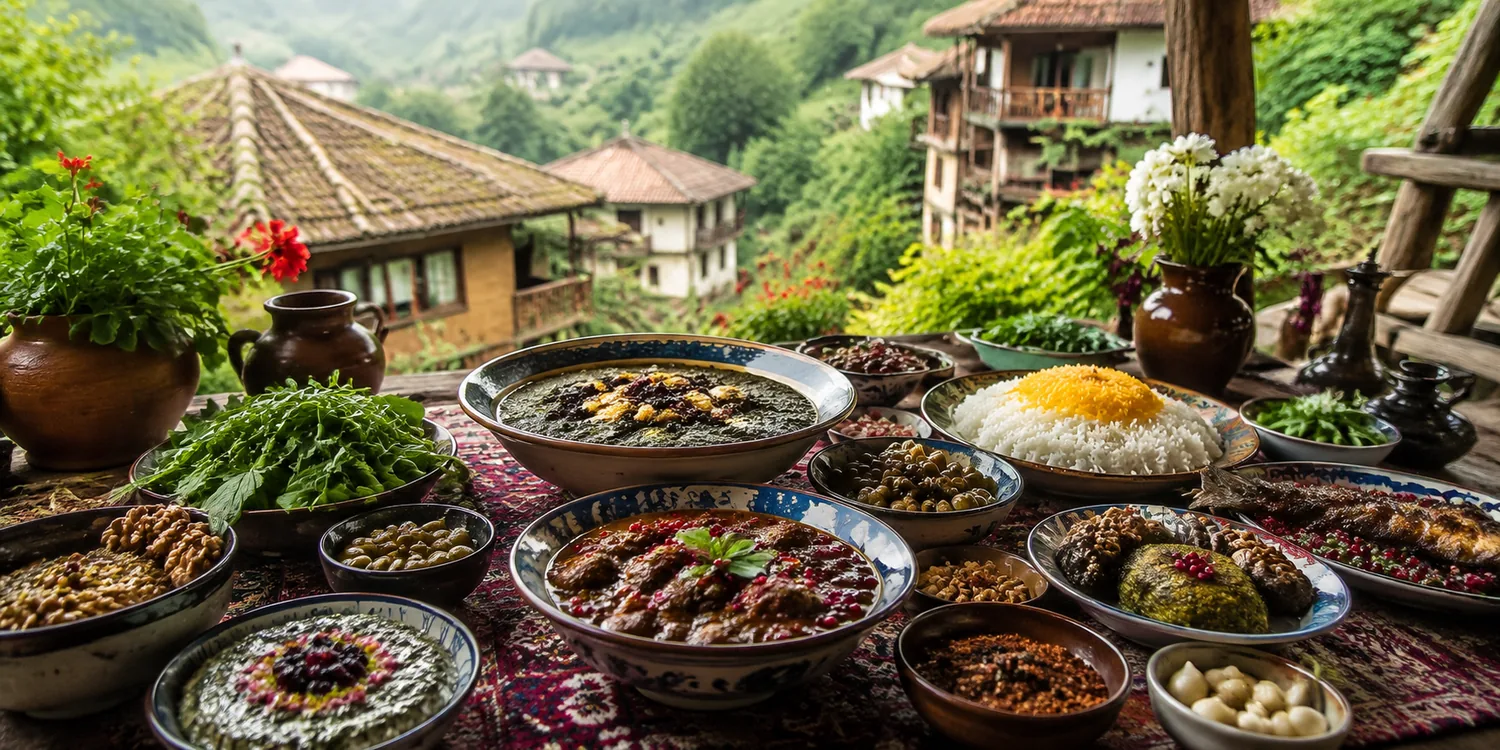
Gilan’s local markets offer a wide variety of traditional pickles, jams, and condiments. Gilan food culture is closely linked to local herbs, forest fruits, and seasonal produce. Popular choices include haft bijar pickle, eggplant and garlic pickles, local pomegranate paste, bitter orange blossom jam, citron jam, and dried local herbs.
Because of Gilan’s humidity and plant diversity, many of these products have aromas and flavours different from industrial versions. Check production dates, packaging, and ingredients, and buy homemade products from trustworthy sellers. To explore regional flavours further, see the guide to Gilani foods.
The Best Gilan Handicrafts to Buy as Souvenirs
Chadorshab Weaving: The Colourful Art of Gilan Women
Chadorshab weaving is an old traditional art of Gilan, particularly common in rural areas and the eastern part of the province. Colourful threads are woven on traditional looms to create fabrics with varied patterns and colours.
In the past, chadorshab had many everyday uses, including covering belongings, carrying agricultural products, and household use. Today, it is mainly valued as a decorative and artistic craft. Tablecloths, handmade bags, decorative fabrics, and traditional coverings are among its products. Buying chadorshab also helps preserve traditional arts and support local makers.
Mat Weaving and Bamboo Weaving
With plants suited to humid areas, Gilan is an important region for woven mat products in Iran. Mat weaving and bamboo weaving are traditional crafts in which dried plant stalks are turned into practical or decorative items, many of which are now used in modern home décor.
The natural and lightweight character of these souvenirs is a key advantage. When buying, check for a regular, firm weave, as such products generally last longer. They suit people looking for a distinctive, nature-friendly souvenir with a local identity.
Pottery and Traditional Gilan Vessels
Pottery is another old art found in different parts of Gilan. Suitable soil and a long history of working with clay have made pottery part of the province’s handicrafts. Alongside everyday uses, pottery is now often bought as decoration. Simple designs, natural colours, and handmade character make these items popular for interiors and a lasting gift.
Rashti Embroidery and Textile Arts
Rashti embroidery is a valuable Gilan art in which colourful threads are used to create traditional designs on fabric. It is used for decorative products, traditional clothing, and practical items. Its motifs are often inspired by nature, flowers, and traditional Iranian patterns.
The delicacy of this art gives its products greater value than mass-produced goods. Bags, wall pieces, tablecloths, and decorated fabrics with Rashti embroidery can be suitable choices for a special gift.
Where to Buy Gilan Souvenirs
Choosing where to shop matters as much as choosing the souvenir itself. Local markets often provide an opportunity to meet producers directly and find fresher products.
Rasht Traditional Bazaar is one of Gilan’s best-known shopping centres for souvenirs, where you can find local foods, spices, pickles, rice, fish, handicrafts, and rural products. Fuman is especially known for fresh cookies and local goods, while its local markets also offer handicrafts and rural products.
Lahijan is a suitable destination for tea and cookies, Rudbar for olives and olive oil, and rural areas for handicrafts and local products. If your itinerary includes Rasht, the guide to places to visit in Rasht can help with planning.
Important Tips for Buying Gilan Souvenirs
- Buy from reliable sellers: Shops with regular customers or direct links to local producers are generally safer choices.
- Check the freshness of foods: Cookies, reshteh khoshkar, pickles, cheese, and dairy products should be fresh; production date and storage conditions matter.
- Inspect packaging: For tea, rice, olives, and olive oil, check producer information, production date, and product details.
- Do not focus only on low prices: For tea, olive oil, and handicrafts, quality matters more than price.
- Examine handmade items carefully: Weaving precision, material quality, and time invested determine the real value of handicrafts.
Experiencing Local Products During a Stay at Delzhin
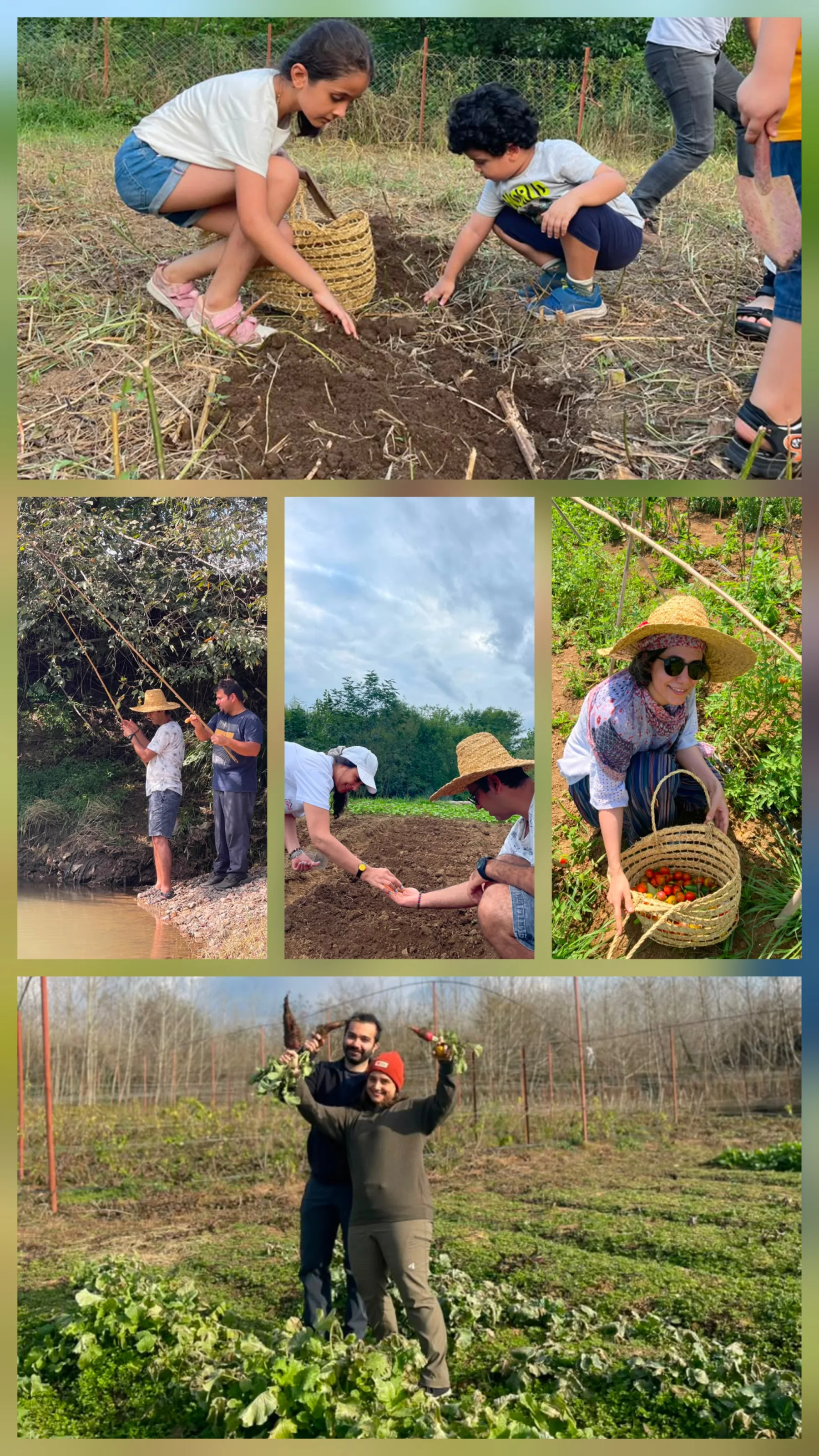
If you are a guest of Delzhin while travelling in Gilan, visit Delzhin Farm to get to know the setting, and use the ecolodge booking page to plan your stay.
Conclusion
Gilan souvenirs are not simply foods or handicrafts; each one carries part of the province’s culture, nature, and way of life. Lahijan tea, Fuman cookies, Rudbar olives, and local rice are choices that are usually well received.
For a longer-lasting gift, chadorshab, mat weaving, and Rashti embroidery offer greater artistic value. The most important point is to consider authenticity and buy from reliable sellers, so your souvenir truly recalls a journey to the land of rain.
Frequently Asked Questions
What souvenirs should I buy in Gilan?
Lahijan tea, Fuman cookies, Rudbar olives, local rice, reshteh khoshkar, and pickles are popular edible choices. For a lasting keepsake, mat weaving, chadorshab weaving, and Rashti embroidery are suitable options.
Which city in Gilan is best for buying souvenirs?
Lahijan is a good option for tea and cookies; Rudbar for olives and olive oil; and Rasht Traditional Bazaar for a broad variety of local products and handicrafts.
Is Lahijan tea worth buying?
Lahijan tea is known for its natural aroma and flavour, but quality depends on harvest time, processing, and storage. It is best purchased from a reliable seller.
What is the longest-lasting Gilan souvenir?
In terms of lifespan, handicrafts such as mat weaving, chadorshab, pottery, and Rashti embroidery last longer. Among foods, tea, rice, and some packaged products have longer storage lives.
What Gilan souvenirs are suitable for children?
Traditional cookies, local sweets, and some packaged products are generally more suitable. When buying food for children, check the ingredients and sweetness level.